In the 1st section of my project, I will be gathering information using interviews to explore the experiences of others and compile data to gain a more rounded perspective in the world of Scots folk song.
Archie Fisher – Folk Singer & Songwriter
From the 1960s, Archie Fisher has been a prolific figure of the Scottish folk scene primarily as a folk singer and songwriter. I have chosen to discuss Archie Fisher as I believe that his ability to arrange, perform and write a variety of songs gives significance in this project due to his key role in both preservation and innovation amongst other aspects of his music in the tradition. (MASON , 2010)

Early influences of Archie Fishers are described in an informal setting help to give perspective historically to a period of a less developed professional music scene and his journey on the music scene wherein conservation Fisher mentions the spontaneous nature of how he first began to learn songs. “I mean I had so many privilege one to one in the studio, well you could include Danny Kyle in that so it was one to two! That had been a very deep influence of what I ended up doing because in the beginning we were all picking bits and pieces here and there. There wasn’t a lot of resource!” This gives additional perspective when talking about processes of learning folk song and periods before events like the 20th-century folk revival where less resource material was available and this example details the interest held within the groups in folk music and social word of mouth approach inside tradition that Archie used learning amongst peers and is furthered when he reveals how he used to learn aurally and occasionally play during his work career in New Jersey. “I went to a café show and there was a jukebox and Rock Island Line was playing, endlessly people wanted to hear it and I thought it was this great American kind of music and I went home and discovered he was from Glasgow so that was the start of Americana type of thing. I picked up a guitar here and there and there were a few people who’d been to school with me that also played the guitar and more or less take it from there.” This description of Archie Fisher’s first experiences of song shows a more varied background separate to folk music and gives a potential generational impact and contrast to learning away from today’s modern commercialized traditional music scene.
Fieldwork Participant – Margaret Bennett
As a folklorist, writer, ethnologist, and singer, Margaret Bennett has a variety of influence in tradition and my focus for the fieldwork interview include initially establishing her preferred approaches to learning traditional repertoire and linking them to themes like authenticity and innovation which could affect the decisions made by the singer in the learning phase.
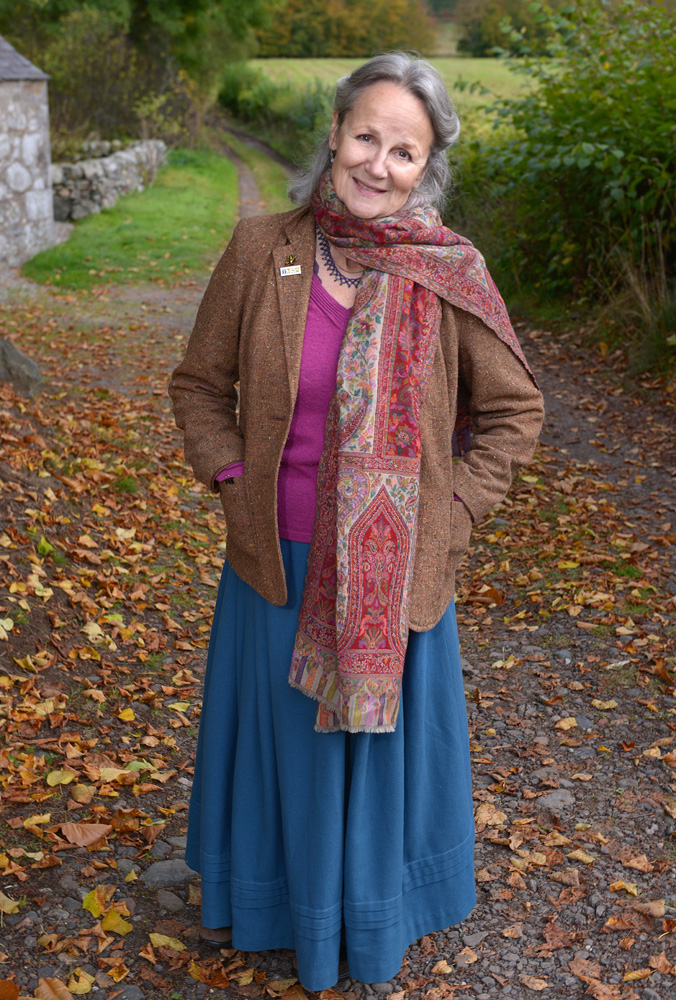
Being a fundamental part of Scots tradition, Scots ballads often feature expansive stories which give a singer variability with how to convey its contents through performance. I wanted to explore the decision-making process through fieldwork discussion linking specifically to themes of authenticity and innovation and the relationship between resource material and the singer in learning.
In interview, Margaret discusses how her decision process is influenced when learning traditional ballads, “Well they’re quite important to me, I think I have to be attracted, the page won’t attract me to a song, I have to hear it. And as far as the melody goes, I virtually never learn anything from a book but the words.” As a singer, Margaret learns new ballads aurally which seems more natural to her, showing the value she believes the feel of a song which offers significance as this effect cannot be obtained solely from resource material (collections). Later, Margaret also states that “I do look at books and even when I learn the text out of a book, don’t I discover later that a year later, I’m not singing that text.”This formulates this idea in the opinions of this fieldwork participant and gives it further credibility as it identifies resource materials as a possible starting point and suggests, in particular, the growth of folk song in each traditional singers repertoire and how an example such as even a challenging traditional ballad can be furthered in a singer’s unique repertoire through critical decision-making.
In later discussions, Margaret gives a specific example of her critical thought process in the song, “The Glasgow Lullaby” by Eric Bogle. “It goes like this: Oh dear me it’s a weary weary life, wha would be a drinkin man’s wife , wha wad bear the struggle and the strife” and he sings “wha but a silly woman”- and at that point I was like no , don’t call these women silly – it may seem almost lunatic to stick with these drunks in fact it is but it’s a sort of testimony to just amazing fortitude of so many women…it doesn’t stop me singing it but for that one I go… “Wha but a loving woman” because however you define love, there can be no bigger if you like testimony of love of somebody who can forgive that again and again and again, we’re not talking about romantic love here, we’re talking about absolute self-sacrificial love so I’ve changed it from the way I sing it simply cause I cannot sing “silly woman.” In this example, Margaret explains her thought process when using her own voicings and centers her interpretation of the intention of this example around the change she implements in performance.
Buchan (1973) discusses the challenges that a traditional singer faces when considering different variations from sources such as collections. “In modern tradition not only are the new poems composed differently but the old poems are also transmitted differently because people come to believe that they too must have a fixed text. Consequently, the singers and reciters of modern tradition memorize the “right” text of an old ballad story, which may be one seen in print, or heard from another singer or from some modern mechanical medium.” These aspects of the tradition could highlight the significance of background knowledge and although some modern performers may be affected by this as a part of the carrying tradition, it could also suggest innovation in the form of experimenting with variants and could build a specific example in an individual’s repertoire over time.
 Scots Singing Tradition : Learning Processes